
Clinical tools by category
Browse the tools by clinical area. A calculator may appear in more than one category when it supports different clinical pathways.
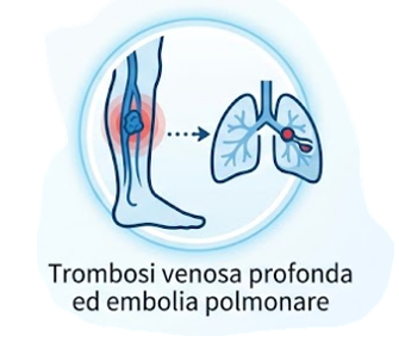
Deep vein thrombosis and pulmonary embolism
- Wells score for DVTTick the nine clinical criteria to get the score and the probability of DVT.
- Age-adjusted D-dimerEnter age and D-dimer to compare the value with the age-adjusted threshold.
- PERC ruleCheck the eight criteria: if all are negative at low clinical probability, PE is excluded without D-dimer.
- YEARS algorithmEnter the three clinical criteria and D-dimer: the threshold becomes 500 or 1000 ng/mL to exclude PE.
- Revised Geneva scoreComplete the clinical variables to get revised and simplified Geneva scores with the probability of PE.
- Caprini scoreTick the surgical patient’s risk factors to get the risk class and the indication for prophylaxis.
- Padua Prediction ScoreTick the eleven factors in a hospitalised medical patient: 4 points or more means high VTE risk.
- IMPROVE scoreComplete the seven variables in a hospitalised medical patient to get the VTE risk score.
- IMPROVEDD scoreAdd D-dimer to the IMPROVE variables to assess extended prophylaxis after discharge.
- RCOG 37a — VTE risk in pregnancyChoose antenatal or postpartum and tick the factors to get the score and an indicative LMWH recommendation.
- Villalta scale — post-thrombotic syndromeGrade five symptoms and six signs, and report any ulcer, to get the presence and severity of the syndrome.
- Anticoagulant selectorChoose the DVT or SVT scenario, weight and special conditions: the tool guides the choice of drug.
Carotid and supra-aortic trunks
- NASCET / ECST carotid stenosis calculatorConvert the stenosis grade between the two methods or derive it from measured diameters, with a report sentence.
- SICVE-SNLG treatment criteria and carotid risk profileEnter symptoms, NASCET stenosis and plaque to get the recommendation and an indicative stroke risk estimate.
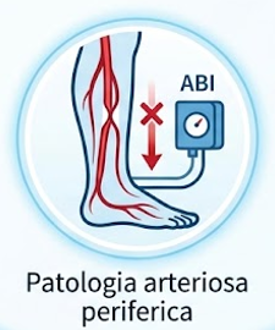
Peripheral arterial disease
- Clinical profile in lower limb arterial diseaseEnter symptoms, lesions and instrumental tests to get a summary of the picture and the assessment pathway.
- ABI — ankle-brachial indexEnter brachial and ankle systolic pressures to get the ABI for each side with its interpretation.
- WIfI — threatened limb stagingAssign wound, ischaemia and infection grades to get the stage, amputation risk and benefit of revascularisation.
- Rutherford and Fontaine classificationsChoose chronic disease or acute ischaemia to convert between the scales and read the indications.
Vascular haemodynamics
- ABI — ankle-brachial indexEnter brachial and ankle systolic pressures to get the ABI for each side with its interpretation.
- Flow volume calculatorEnter diameter and mean velocity to get flow in ml/min, for example for AVF surveillance.
- RI — resistive indexEnter PSV and EDV to get RI and PI with interpretation by vascular territory.
- IVC and VExUS — collapsibility and venous congestionEnter IVC diameters and hepatic, portal and intrarenal Doppler patterns to get collapsibility and VExUS grade.
Classifications, conditions and ulcers
- WIfI — wound, ischaemia and foot infectionAssign wound, ischaemia and infection grades to get the stage, amputation risk and benefit of revascularisation.
- CEAP — chronic venous disease classificationChoose clinical class, aetiology, anatomy and pathophysiology to get the CEAP code (2020 revision).
- VCSS — venous clinical severity scoreScore the ten items from 0 to 3 to get a severity score, useful for following treatment response.
- Rutherford and Fontaine classificationsChoose chronic disease or acute ischaemia to convert between the scales and read the indications.
- Villalta scale — post-thrombotic syndromeGrade five symptoms and six signs, and report any ulcer, to get the presence and severity of the syndrome.
- Venoactive drug selectorEnter clinical picture, CEAP class and risk factors to get usable drugs, those to avoid and the report text.
How they should be used
These tools reproduce models validated in the literature and summaries of national and international recommendations. They help make clinical reasoning explicit and traceable; they do not replace it. A score estimates probability or risk, not a diagnosis, while a classification describes a condition and does not determine its treatment. Review the assumptions and intended population before using any tool.
All calculations happen locally in the browser: no patient data is transmitted or stored on a server, consistently with how the whole of VascularReport is designed.